
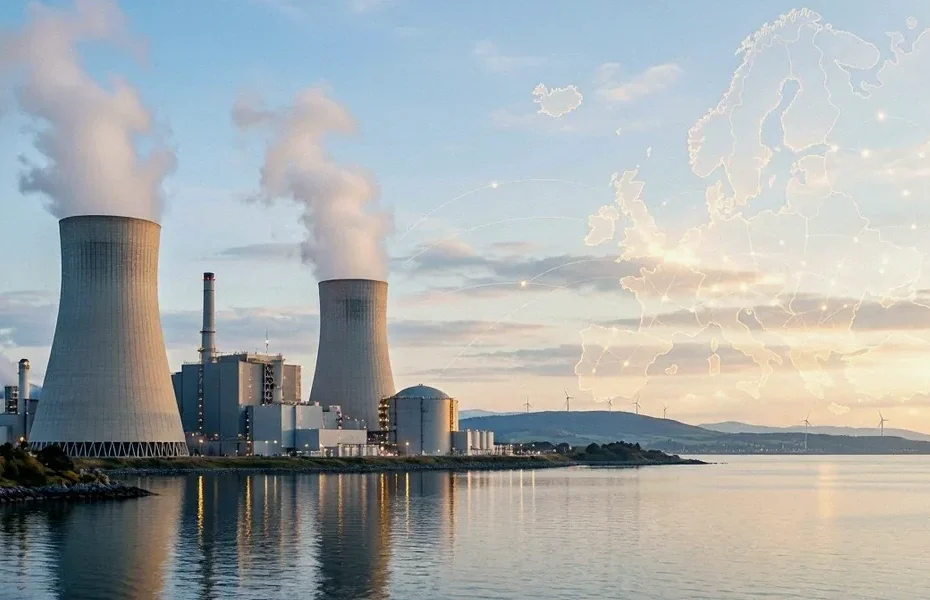
Nuclear Power’s Place in Europe’s Energy Mix
Europe’s energy security debate has returned with real urgency. Russia’s invasion of Ukraine exposed how exposed the continent had become to imported gas, and the resulting price spikes pushed nuclear power back to the top of the policy agenda. For UK businesses, investors and media, the question is no longer whether nuclear has a future, but how quickly it can be built, financed and sold to a public that has spent decades hearing mixed messages. We’ve followed the corporate announcements, the government targets and the PR battles closely — here’s where things actually stand.
Europe’s Energy Landscape: Where Nuclear Fits Now
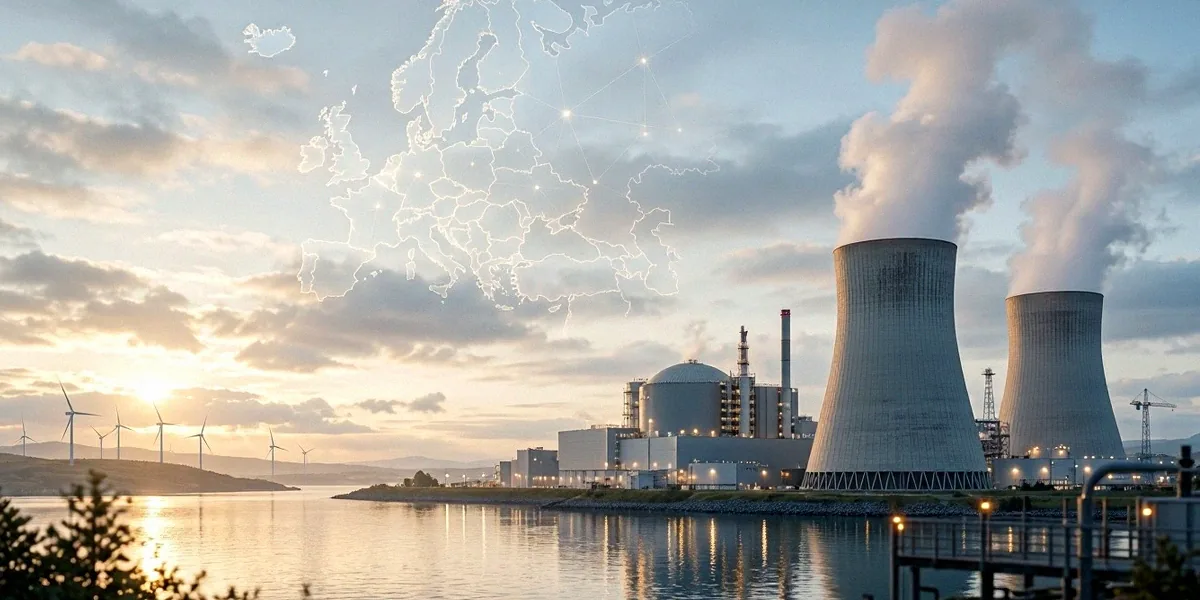
Nuclear has never fully left the European grid, but its political standing has swung wildly over the past two decades. The 2022 crisis forced a rethink across Brussels and national capitals alike, and the result is a sector that is once again attracting serious capital and serious headlines.
The 2022 Wake-Up Call and REPowerEU
When gas prices spiralled in 2022, the EU responded with REPowerEU, a plan designed to cut dependence on Russian fossil fuels through efficiency, renewables and diversified supply. Nuclear was not the headline act, but it was quietly folded into the strategy as a reliable low-carbon baseload source. For member states with existing fleets, that recognition mattered — it opened the door to extended lifetimes, new build subsidies and a more sympathetic treatment in EU funding rules.
France vs Germany: Two Nuclear Paths
The contrast between Europe’s two largest economies could hardly be sharper. France operates 56 nuclear reactors and generates around 70% of its electricity from nuclear, making it the most nuclear-dependent major economy in the world. Germany, by contrast, completed its phase-out in 2023, shutting its final plants and betting instead on renewables and imported power. That divergence now shapes everything from EU taxonomy negotiations to cross-border electricity pricing.
Nuclear’s Current Share of EU Electricity
Across the EU as a whole, nuclear provides roughly 25% of electricity generation. That figure has drifted downward as German plants closed and French reactors underwent stress corrosion repairs, but it remains a quarter of the bloc’s power — too large to ignore and, according to many industry voices, too valuable to let shrink further.
The UK’s Nuclear Ambition: From Hinkley to SMRs
Britain’s nuclear story is one of grand ambitions, stretched timelines and a slow pivot toward smaller, cheaper designs. The pipeline now stretches from Somerset to Cumbria and beyond.
Hinkley Point C and Sizewell C: Big Reactors, Big Bills
Hinkley Point C in Somerset is the UK’s first new nuclear plant in decades, with costs exceeding £46bn — a figure that has repeatedly made front pages and prompted uncomfortable questions about delivery. Sizewell C in Suffolk has secured approval and is being developed as a near-copy of Hinkley, on the logic that replication should reduce risk. Whether that logic holds will shape investor confidence for years.
Rolls-Royce SMR and the Small Modular Race
Rolls-Royce SMR is leading the UK’s small modular reactor programme with a 470 MW design, and its factory-built approach is central to the government’s hope of cheaper, faster deployment. Competition is intensifying: 2024 saw Holtec and Westinghouse enter the UK selection process with their own SMR proposals, turning Great British Nuclear’s technology choice into one of the sector’s most closely watched corporate announcements.
Great British Nuclear and Government Targets
Great British Nuclear was established to drive delivery and coordinate the pipeline, and it now sits at the centre of a strategy that includes large reactors, SMRs and lifetime extensions. The government’s headline ambition — 24 GW of nuclear capacity by 2050 — would represent roughly a quarter of projected electricity demand, up from around 15% today.
The Business and Investment Case for Nuclear
For UK plc, nuclear is increasingly framed as an industrial opportunity rather than just an energy source. The financing structures, offtake agreements and supply chain contracts now being negotiated will determine who profits.
Funding Models: RAB and Private Capital
The Regulated Asset Base (RAB) model, first used for Sizewell C, allows consumers to contribute to construction costs through bills in exchange for lower financing costs. EDF, Centrica and a range of institutional investors have engaged with the model, which supporters argue de-risks projects and critics say transfers risk to households.
Corporate PPAs and Net-Zero Commitments
Long-term power purchase agreements are becoming a practical route for corporates chasing credible net-zero plans. Firms including Octopus Energy and SSE have positioned nuclear-backed supply within broader low-carbon portfolios, giving business customers a route to firm, dispatchable clean power rather than relying solely on intermittent renewables.
Supply Chain and Job Creation
The industrial footprint is substantial. Civil construction, precision engineering, fuel handling and decommissioning all require skilled labour, and regions from Somerset to the North West are already seeing apprenticeship and training investment tied to nuclear contracts.
- Civil engineering and construction roles across Hinkley Point C and Sizewell C
- Manufacturing and modular assembly for Rolls-Royce SMR and competing designs
- Fuel cycle, waste management and decommissioning expertise centred on Sellafield
- Regulatory, legal and communications roles supporting licensing and public consultation
Media, PR and Public Opinion: Selling Nuclear Again
Nuclear’s revival depends as much on narrative as on engineering. Press releases, crisis communications and sustained media engagement have moved UK public support from around 35% to roughly 50% in recent years — a shift that has given policymakers political cover.
How PR Shapes the Nuclear Narrative
EDF’s UK communications operation, the Nuclear Industry Association’s steady stream of statistics and endorsements, and coordinated announcements around jobs and investment have all contributed. The framing has moved from risk to reliability, and from legacy cost to energy sovereignty.
Case Study: Hinkley Point C Press Coverage
Hinkley Point C offers a masterclass in how coverage swings. Milestone announcements generate positive headlines about jobs and clean power; cost revisions generate critical ones about value for money. The lesson for PR teams is that transparency about delays tends to limit the damage of later revelations.
Counterpoints: Greenpeace and Anti-Nuclear Voices
Greenpeace and other campaign groups continue to argue that nuclear is too slow and too expensive to address climate targets, and that waste remains unresolved. Their press releases and legal challenges keep the counterargument in the news cycle, ensuring the debate stays contested.
Challenges and Controversies: Waste, Cost and Time
No honest account of nuclear’s comeback can skip the hard problems. Waste, overruns and regulatory fights are all part of the story.
Radioactive Waste and Sellafield
Sellafield in Cumbria is home to the UK’s largest radioactive waste store, and its decommissioning programme will run for decades and cost tens of billions. Progress on a geological disposal facility remains essential to any credible long-term settlement.
Cost Overruns: Flamanville and Olkiluoto
Europe’s recent large-reactor projects have been costly lessons. Flamanville 3 in France and Olkiluoto 3 in Finland both ran years late and far over budget, and those experiences directly inform the current enthusiasm for standardised SMR designs.
EU Taxonomy and Green Label Fights
The EU’s decision to include nuclear within its sustainable finance taxonomy was contested fiercely and remains politically fragile. For investors, the classification matters enormously — it determines access to green bonds and ESG-labelled funds.
What’s Next for Nuclear in Europe?
The direction of travel is clear, even if the pace is not. Policy consistency over the next decade will decide whether today’s targets become tomorrow’s reactors.
UK 24 GW Target and 2050 Roadmap
The UK government aims for 24 GW of nuclear capacity by 2050, supported by Great British Nuclear’s technology selection and a pipeline that includes Sizewell C, SMRs and potential lifetime extensions.
France’s Nuclear Renaissance
France has announced plans for up to 14 new reactors, alongside lifetime extensions for its existing fleet, cementing its position as Europe’s nuclear anchor.
Fusion’s Long-Term Promise
Beyond fission, companies such as First Light Fusion and Tokamak Energy are attracting private capital for fusion research. Commercial timelines remain distant, but the media interest is already shaping how the public thinks about nuclear’s future.
FAQ
How much of Europe’s electricity comes from nuclear power?
Nuclear supplies roughly 25% of EU electricity, with France alone generating around 70% of its power from nuclear across 56 reactors.
What is the UK’s nuclear capacity target?
The UK government aims for 24 GW of nuclear capacity by 2050, up from around 15% of current electricity generation.
What is the Rolls-Royce SMR design?
Rolls-Royce SMR is leading the UK’s small modular reactor programme with a 470 MW design intended for factory-based construction.
Where is the UK’s largest radioactive waste store?
Sellafield in Cumbria is home to the UK’s largest radioactive waste store and hosts the country’s most complex decommissioning programme.
Why did Germany close its nuclear plants?
Germany completed its nuclear phase-out in 2023, following a long-standing political decision to shift toward renewables and imported power.
Nuclear’s comeback in Europe will hinge on three things: consistent policy across electoral cycles, transparent communication from operators and regulators, and sustained investment through models like RAB and corporate PPAs. We’ll keep tracking the corporate announcements, government statements and media narratives that shape this sector — follow our coverage for the latest press releases and business news from the UK and Europe.