
Mobile Gaming: A Short Business History
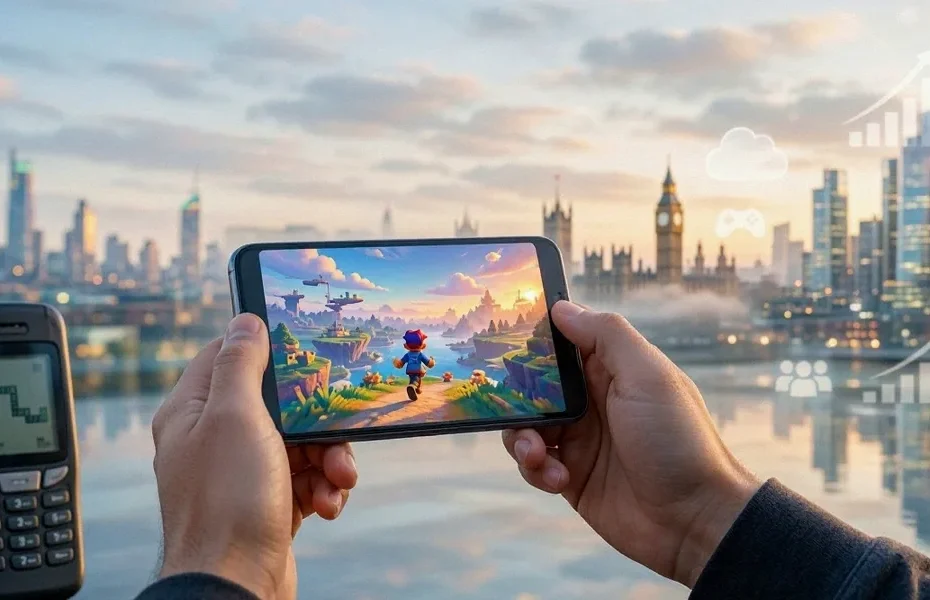
Cast your mind back to a time when the most addictive game in Britain wasn’t on a console or a PC, but on a chunky Nokia handset tucked into a jacket pocket. For millions of UK users, the humble game of Snake was the first taste of interactive entertainment on the move — and it quietly kickstarted an industry that now generates more revenue than console and PC gaming combined. Here at naeurope.co.uk, we’ve watched the corporate announcements, press releases and business news pour in over the years, and the story of mobile gaming is one of the most remarkable in modern media. Let’s trace how a pixelated snake became a multi-billion-pound global business.
The Dawn of Mobile Gaming: From Snake to Java

Long before smartphones, app stores or in-app purchases, mobile gaming was a novelty bolted onto devices sold primarily for calls and texts. Yet that novelty would prove to be the foundation of an entire industry.
Nokia’s Snake and the Accidental Franchise
Nokia’s Snake, launched in 1997, is widely considered the first mobile game to reach mass adoption, especially in the UK. Pre-installed on the Nokia 6110, it required nothing more than a directional pad and a bit of patience. Nobody at Nokia treated it as a commercial product in its own right — it was a bonus feature — but its popularity demonstrated that people would happily play games on a device they already carried everywhere. The accidental franchise proved a crucial point to the industry: distribution mattered more than production values.
Java, Brew and the First Mobile Game Publishers
As handsets gained colour screens and slightly more processing power, Java ME and Qualcomm’s BREW platform opened the door to third-party development. Suddenly, dedicated mobile game publishers emerged, porting simplified versions of console titles and building original puzzle and racing games. This was the era of the £3 download, and it created the first genuine business models around mobile entertainment — modest by today’s standards, but proof that consumers would pay for games on a phone.
UK Carriers and the Premium SMS Economy
UK carriers like Vodafone and Orange drove early adoption through WAP portals and premium SMS billing. Because most users didn’t have credit cards linked to their handsets, operators acted as the payment intermediary, taking a hefty cut in the process. For a period in the mid-2000s, the mobile operator was effectively the gatekeeper of the entire gaming economy — a position that would soon be challenged by a certain company in Cupertino.
The App Store Revolution and the Rise of Free-to-Play
If Snake planted the seed, Apple’s App Store rewrote the rulebook entirely. The shift from operator-controlled portals to open digital storefronts transformed who could make, sell and profit from mobile games.
Apple’s App Store and the Democratisation of Distribution
When Apple launched the App Store in 2008, it removed the carrier bottleneck almost overnight. Developers could publish directly, set their own prices and reach a global audience without negotiating with network operators. The result was an explosion of creativity and competition. Small studios suddenly had a realistic path to millions of players, and the economics of game development shifted decisively toward mobile.
King, Rovio and the European Casual Gaming Boom
Europe — and London in particular — became a powerhouse of casual gaming. Finland’s Rovio scored a global hit with Angry Birds, while King, the London-based developer of Candy Crush Saga, turned match-three puzzles into a cultural phenomenon. King’s success was so significant that it was acquired by Activision Blizzard in 2016 for $5.9 billion, a deal that underlined just how valuable a well-executed mobile franchise had become. For UK studios, King’s rise was a beacon: you didn’t need a console pedigree to build a billion-dollar business.
In-App Purchases and the New Business Model
Free-to-play, powered by in-app purchases, became the dominant model. Instead of charging upfront, developers gave the game away and monetised the most engaged players through virtual currency, extra lives and cosmetic items. It was controversial, occasionally criticised, but undeniably effective. The model also made scale essential: with millions of downloads needed to sustain revenue, marketing and live operations became as important as game design.
Consolidation and the Corporate Giants
As mobile gaming matured, the corporate announcements grew larger. What had been a scrappy startup sector became a strategic battleground for some of the biggest names in global entertainment.
Tencent, Supercell and the Asian Investment Wave
Tencent acquired a majority stake in Finland’s Supercell in 2016 for around $8.6 billion, a landmark deal that signalled Asia’s growing dominance in mobile gaming investment. Supercell’s Clash of Clans and Clash Royale had already proven that European studios could build global franchises, and Tencent’s backing gave the Finnish firm enormous firepower. The transaction also demonstrated that mobile gaming was now a serious asset class, not a niche curiosity.
Take-Two, Zynga and the Console-PC Crossover
Take-Two’s acquisition of Zynga marked another milestone: a traditional console and PC publisher buying its way into mobile at scale. The logic was straightforward — mobile offered recurring revenue, vast audiences and valuable intellectual property. For UK studios, these deals meant more potential buyers, but also more competition for talent and attention.
Microsoft, Activision and the Regulatory Spotlight
Microsoft’s proposed acquisition of Activision Blizzard brought mobile gaming squarely into the regulatory spotlight, with competition authorities scrutinising the deal’s implications for cloud gaming and mobile storefronts. The UK’s Competition and Markets Authority played a prominent role in the debate, reminding the industry that corporate announcements in this space now carry geopolitical and regulatory weight.
The UK and European Mobile Gaming Scene Today
Today, the UK and Europe remain central to the global mobile gaming map, with a dense ecosystem of studios, publishers, ad-tech firms and investors.
London as a Global Mobile Gaming Hub
London has become a genuine global hub. The UK’s Space Ape Games, founded in 2012, was acquired by Supercell in 2017 — a notable example of a Finnish giant investing in British talent. Playdemic, based in Manchester, built Golf Clash into a major title before being acquired by EA. Alongside King, these studios have cemented the UK’s reputation for producing world-class mobile developers.
European Publishers and Hyper-Casual Dominance
On the continent, French firms like Voodoo and Gameloft have led the charge in hyper-casual and mid-core titles. Voodoo’s rapid-fire approach to simple, ad-monetised games reshaped expectations around development cycles, while Gameloft’s long history in mobile gave it a broad portfolio. Together, European publishers have proven that the continent can compete with Asia and North America on both creativity and scale.
Brexit, Talent and Funding Challenges
Brexit has complicated the picture for UK studios. Access to European talent has become more bureaucratic, and funding routes that once flowed freely across the Channel now require more planning. Many UK developers have responded by opening European offices or restructuring, while investors weigh currency risk and regulatory divergence. It’s a live issue that our team continues to track through the press releases and corporate filings that cross our desk.
What the Press Releases Tell Us About the Future
If we read the corporate announcements carefully, a few clear themes emerge about where mobile gaming is heading next.
- Cloud gaming and subscriptions: services that stream games to any device threaten to reshape distribution once again.
- AR, VR and the metaverse: publishers are experimenting with immersive formats, though mass adoption remains uncertain.
- Regulation: the Online Safety Bill, progressing through UK Parliament, includes provisions that could affect mobile game chat and user-generated content.
Cloud Gaming and Subscription Services
Cloud gaming promises to remove hardware barriers entirely, letting players stream console-quality titles to a phone. Subscription bundles, meanwhile, offer predictable revenue for publishers and a curated library for consumers. For mobile-first companies, the question is whether they become part of these platforms or compete against them.
AR, VR and the Metaverse Promise
Augmented reality had its moment with Pokémon Go, and publishers continue to explore location-based and immersive experiences. The metaverse hype has cooled somewhat, but the underlying ambition — persistent, social, cross-platform worlds — still shapes strategy at the largest firms.
UK Regulation and the Online Safety Bill
The Online Safety Bill, progressing through UK Parliament, includes provisions that could affect mobile game chat and user-generated content. Age verification, content moderation and reporting duties may add compliance costs, particularly for smaller studios. For UK developers, staying ahead of these rules is now part of doing business.
Mobile gaming’s business history is still being written, and UK and European companies are poised to play a pivotal role in the next chapter — from London’s studio scene to the continent’s publishing powerhouses. We’ll keep covering the press releases, corporate announcements and media developments that shape it.
FAQ
What was the first mobile game to reach mass adoption?
Nokia’s Snake, launched in 1997, is widely considered the first mobile game to reach mass adoption, especially in the UK, thanks to its pre-installation on popular Nokia handsets.
How much did Activision Blizzard pay for King?
King, the London-based developer of Candy Crush Saga, was acquired by Activision Blizzard in 2016 for $5.9 billion.
When did Tencent acquire Supercell?
Tencent acquired a majority stake in Finland’s Supercell in 2016 for around $8.6 billion.
Which UK studio was acquired by Supercell?
The UK’s Space Ape Games, founded in 2012, was acquired by Supercell in 2017.
How could the Online Safety Bill affect mobile games?
The Online Safety Bill, progressing through UK Parliament, includes provisions that could affect mobile game chat and user-generated content, potentially adding moderation and compliance duties for developers.